IOS APP • PROTOTYPE 2025
An A.I.-powered recipe app to help home cooks cook more, starting with what they already have
TOMATO is a concept for a recipe and cooking companion app designed to help home cooks make better use of the ingredients they already have. With an emphasis on personalization, and delight, TOMATO reframes cooking as a creative, low-pressure experience rather than a chore.
ROLE
Product/UX Designer
TIMELINE
12 Weeks
TEAM
2 Designers
TOOLS
Figma, User Interviews, Usability Testing, Competitive Analysis, Prototyping
The Problem
People want to cook more, for health, budget or sustainability reasons, but life gets in the way. Recipe apps often assume ideal conditions: full pantries and ample time. In reality, people are often unsure of what to cook and default to convenient options like takeout and frozen meals. This results in unused groceries and food waste.
How might we re-imagine the recipe app to help home cooks make more of the recipes they love using ingredients they already have?
Key Insights
Through interviews with 14 home cooks across the U.S. from a range of socioeconomic backgrounds and household types, we uncovered several insights.
1. Recipes are references, not rules
Home cooks didn’t follow recipes step-by-step. Instead, they scanned for ideas, then adapted based on taste, time, or available ingredients. This revealed a need for tools that support flexibility in recipes.
2. Food waste begins at the grocery store
They often shopped optimistically, buying ingredients for meals they hoped to cook. During the week, schedules and decision fatigue made those plans unrealistic, leaving ingredients unused. Users recognized this gap and wanted help bridging it.
3. Cooking confidence is higher than expected
While many users self-identified as “not expert” cooks, most felt capable of executing and adjusting recipes. The pain points lied in planning and deciding. Users wanted tools that helped narrow and filter options.
4. Even satisfied cooks aspire for more in the kitchen
Even cooks who felt content with their current meal routines expressed a desire to be more intentional. For example, even the satisfied cook aspired to be more creative or ambitious in the kitchen.
5. Cooking has a social aspect
Users described cooking as a way to connect with family and friends by hosting, sharing what they’ve made or sending each other photos.
The Solution
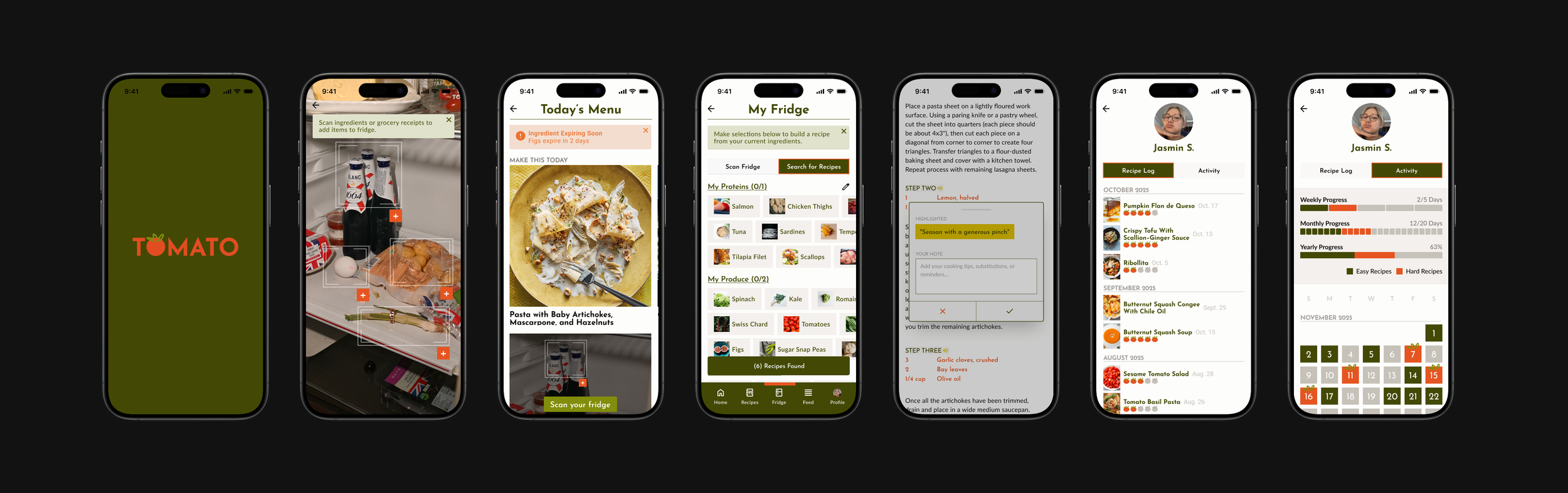
An A.I.-powered scanner lets users take a photo their fridge or grocery receipt to easily log ingredients and track expiration dates.
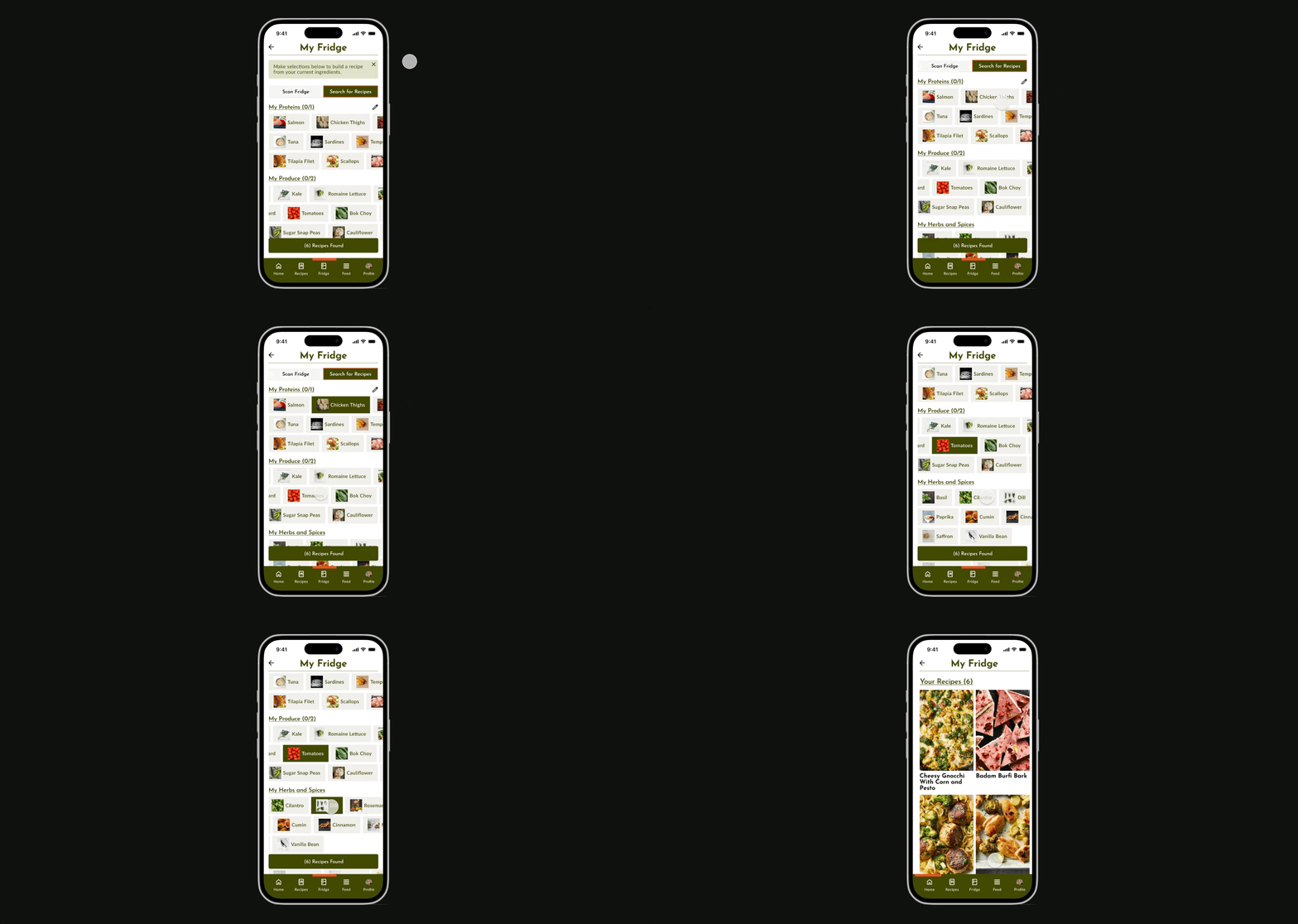
Users search based on what ingredients they have on hand, finding recipes they can cook now, without another grocery run.
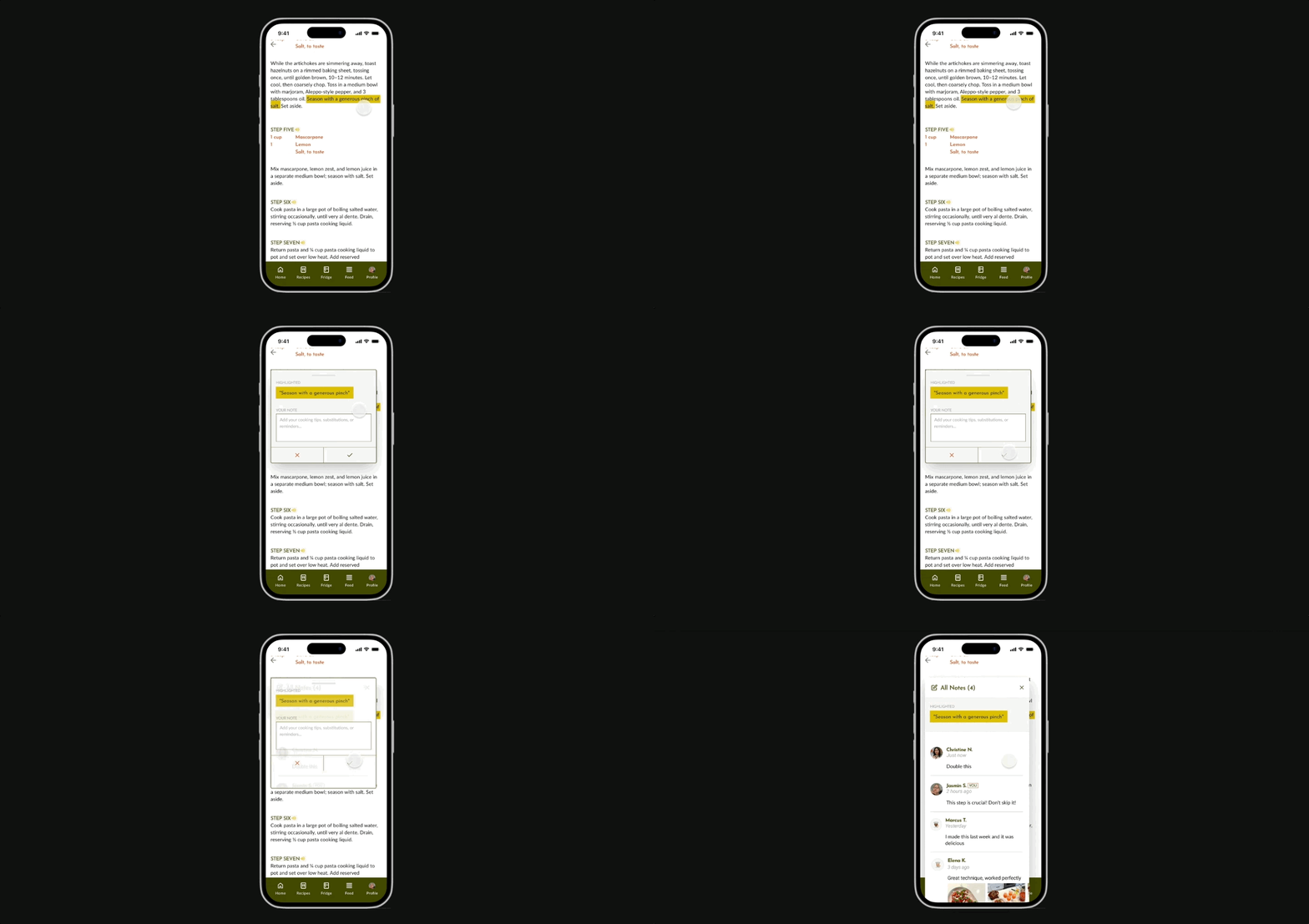
Users can read cooking notes from other cooks by clicking on a shared annotation or they can leave a note of their own.
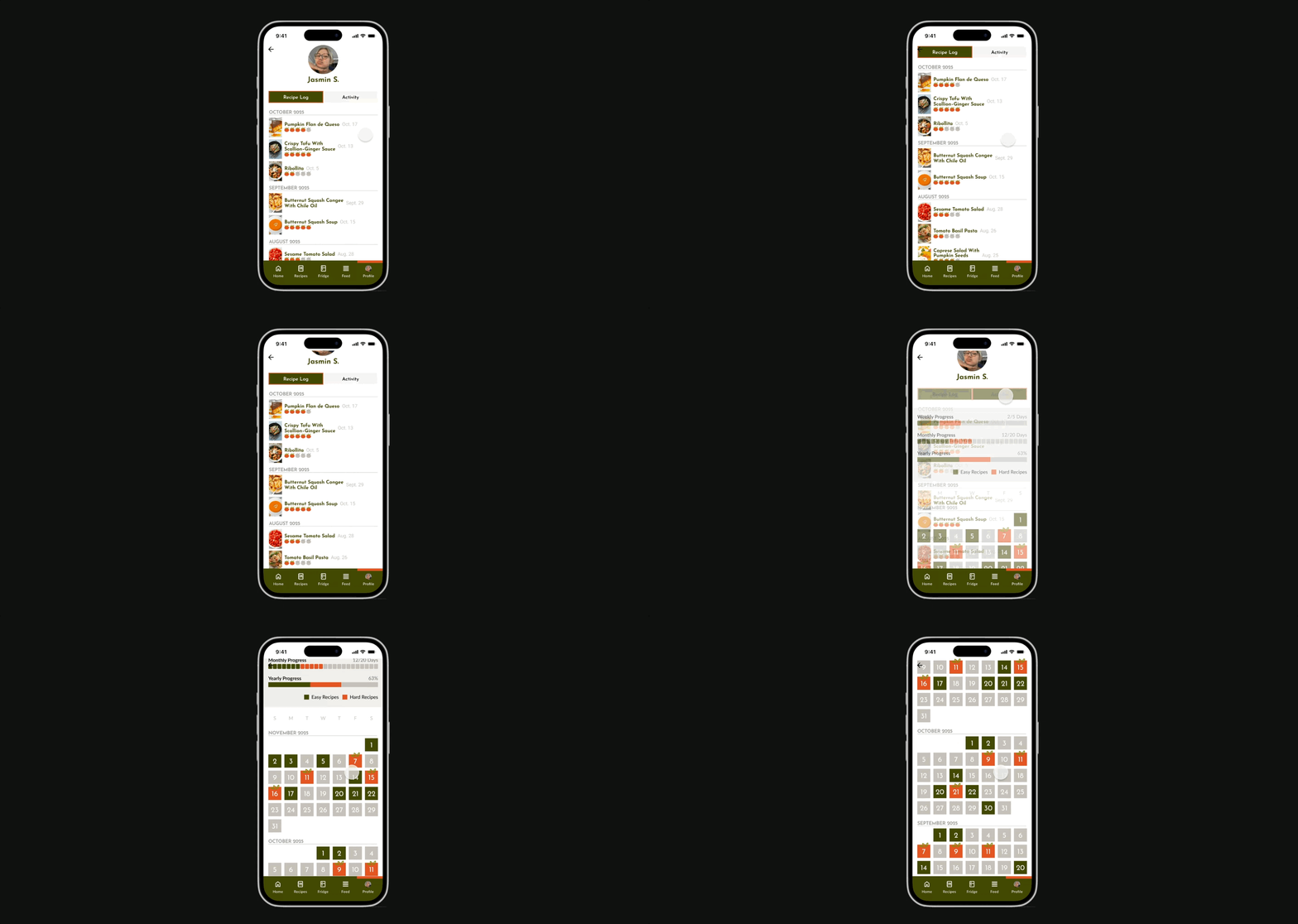
A personalized cooking diary let’s users see how often they’re cooking, set goals, and track overall culinary progress.
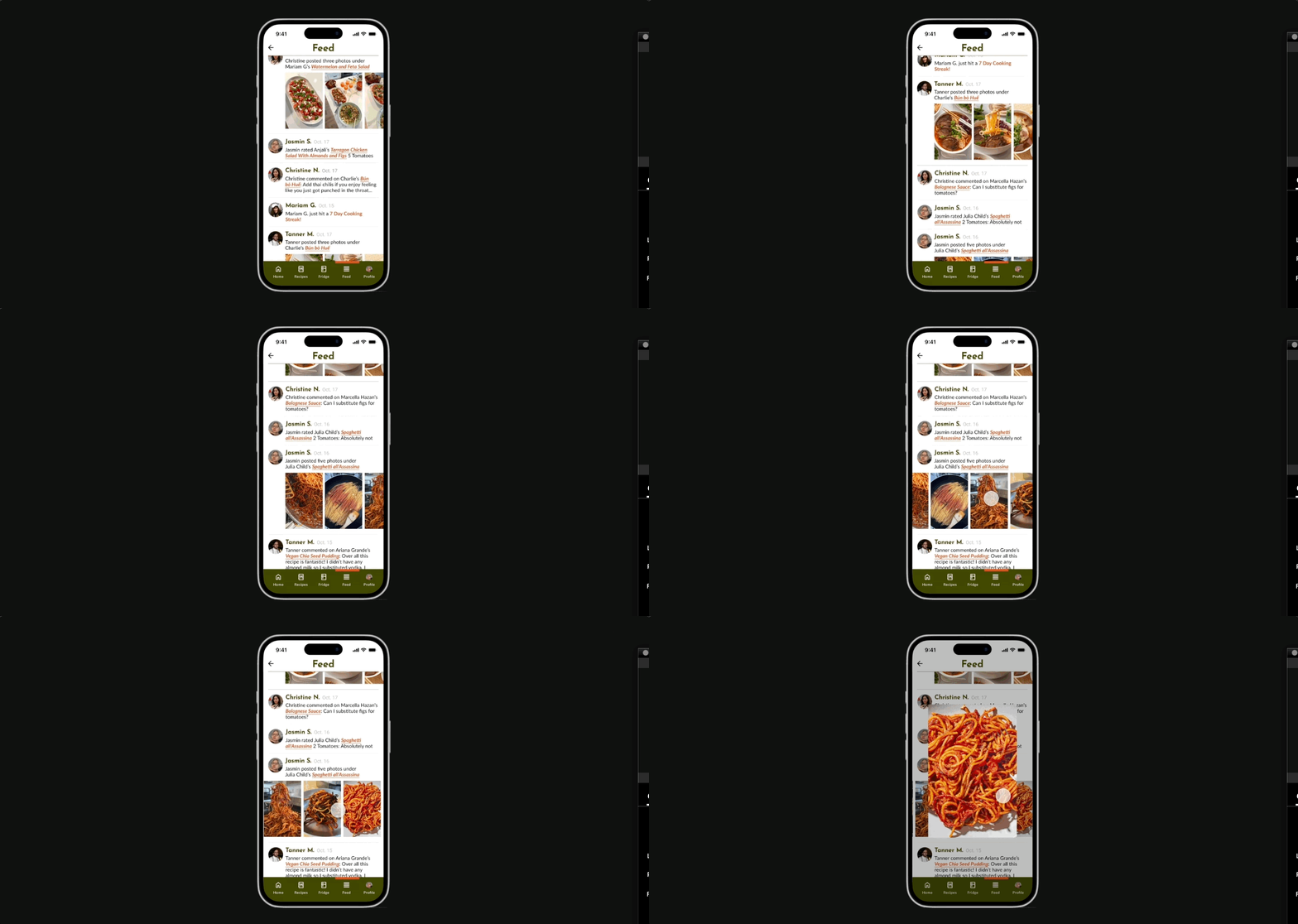
A cooking social feed lets users share what they’re making with friends and family or find recipe inspiration.
User Flows & Protyping
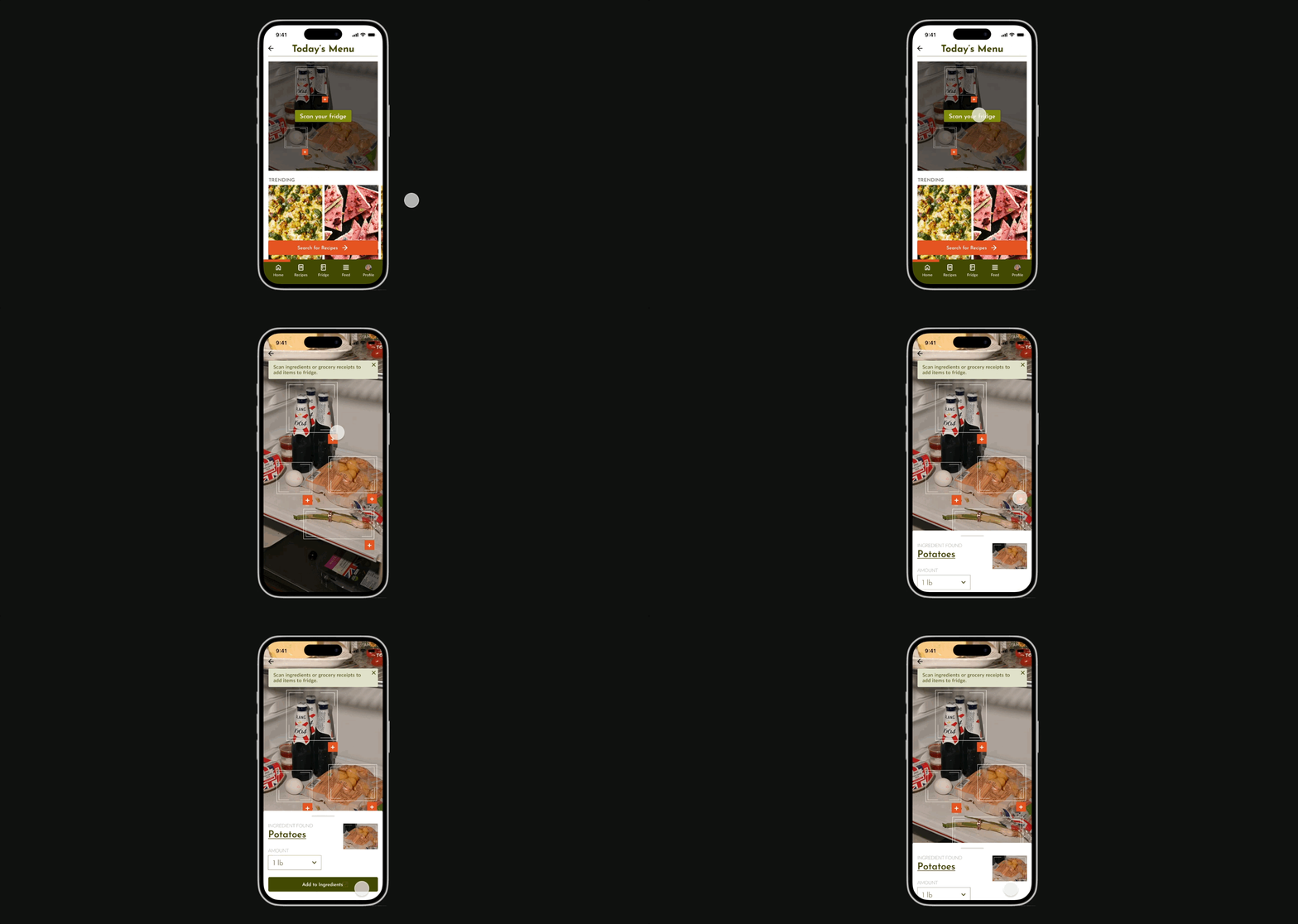
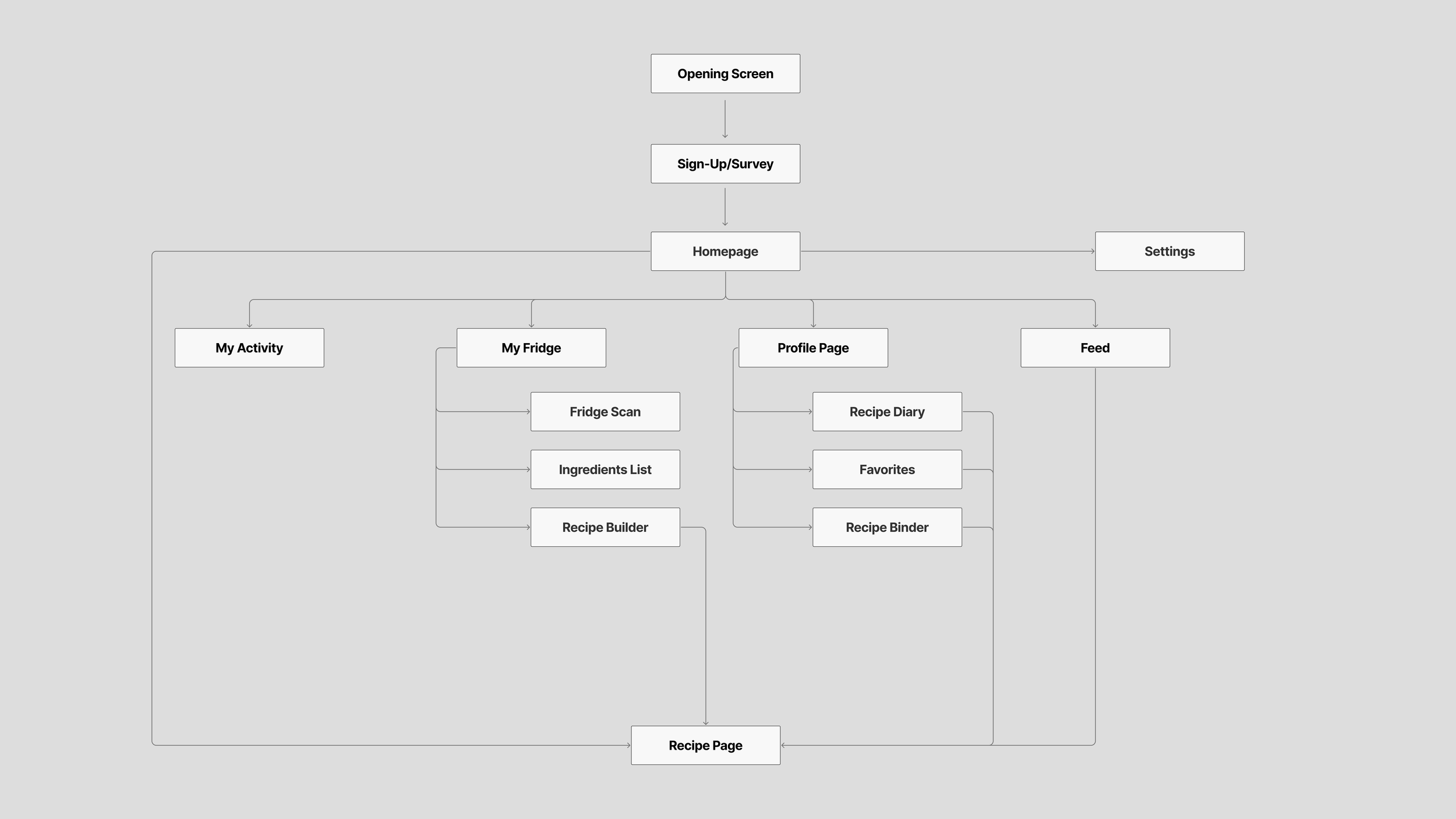
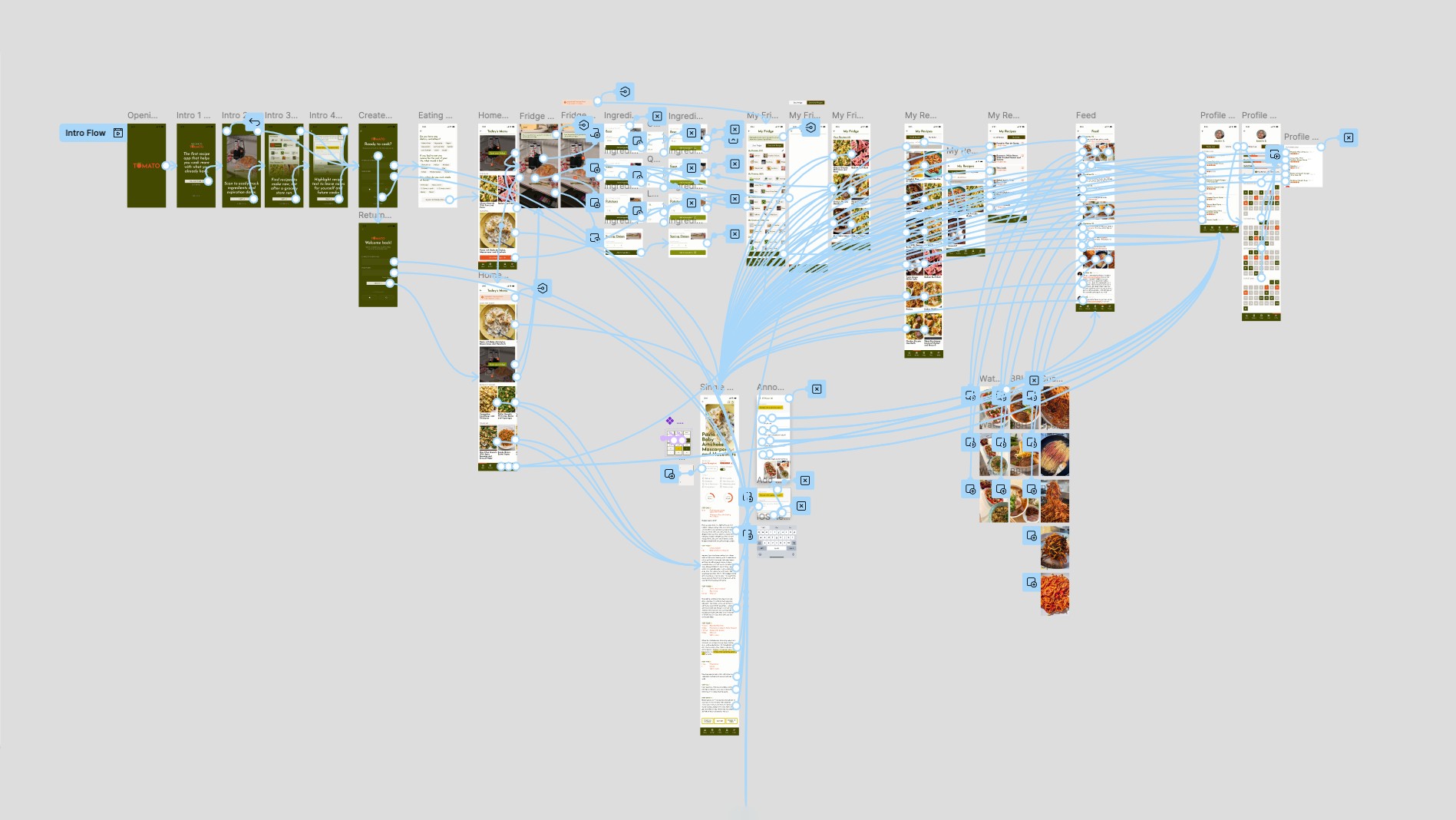
Before designing screens, we mapped core user flows to understand how someone would move from “What’s in my fridge?” to “I’m cooking this tonight.”
Key flows we designed:
Scan fridge → view available ingredients → discover recipes
Search by ingredient → filter by time, tools, or preferences
Save, annotate, and return to past meals
Brand Exploration & Visual Identity
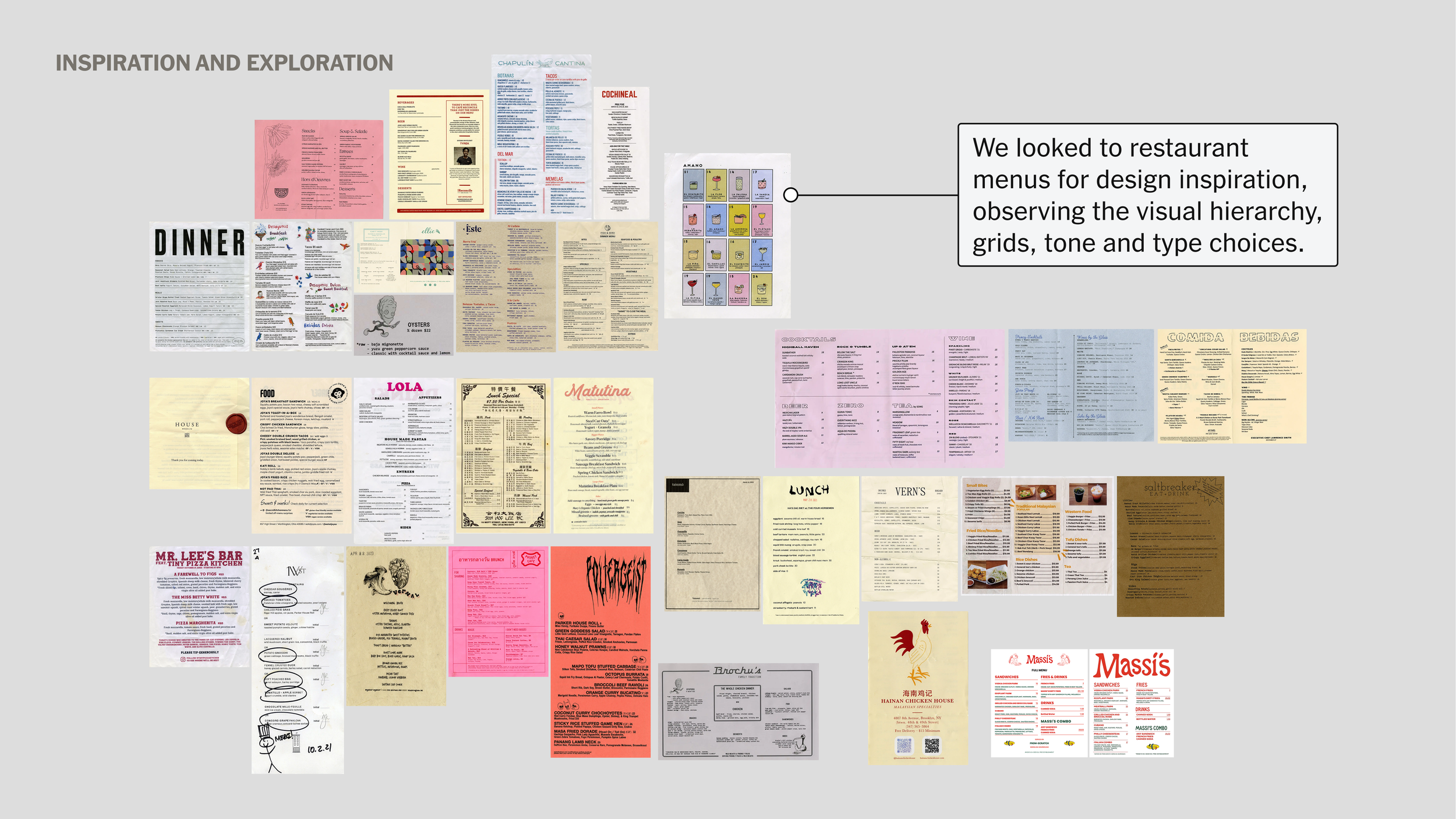
We wanted TOMATO to feel supportive, playful, and confident. We didn’t want to come across as overly authoritative.
How we approached it:
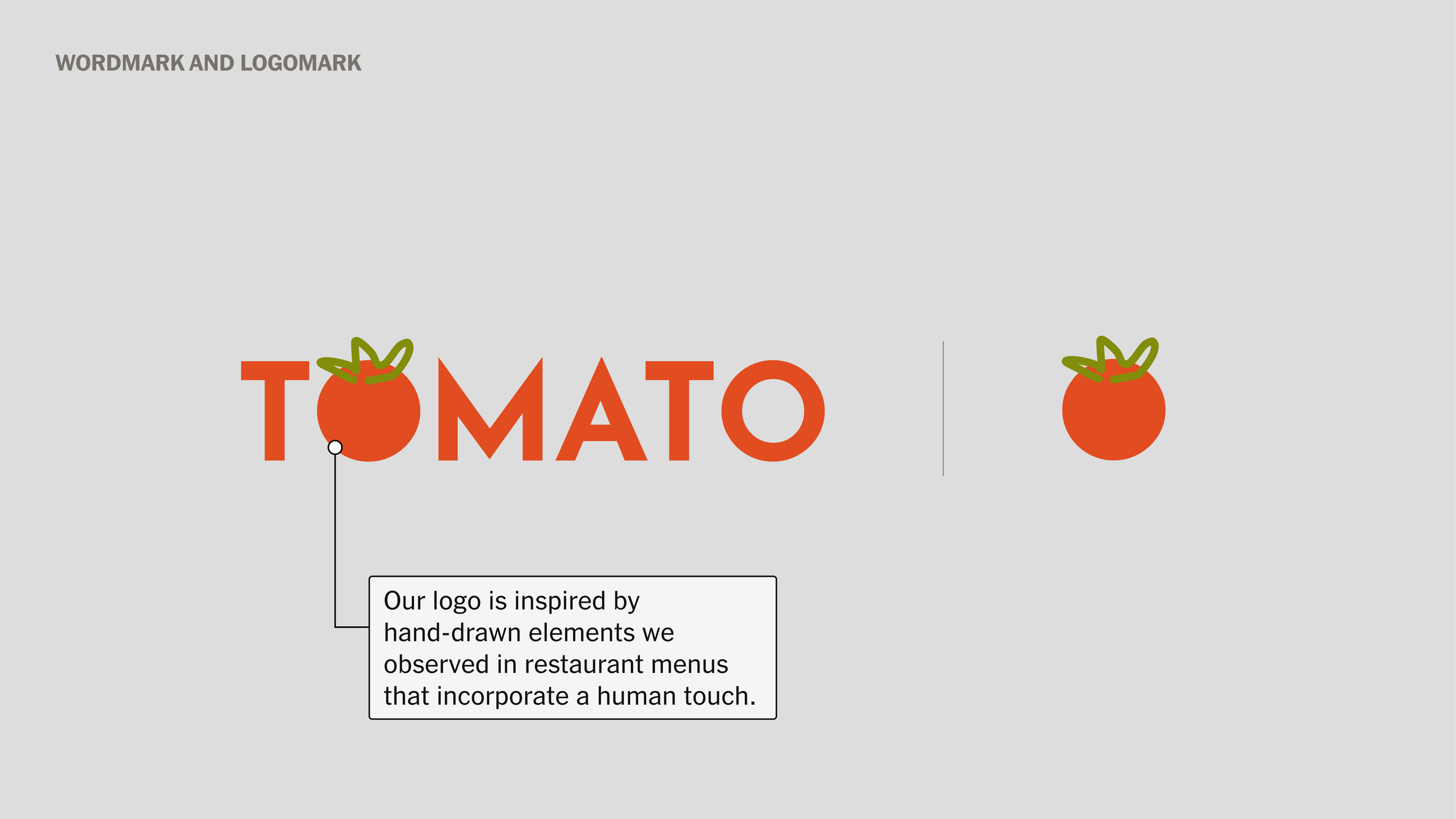
We chose a name and tone that felt lighthearted and whimsical. We carried that tone through to our logo design.
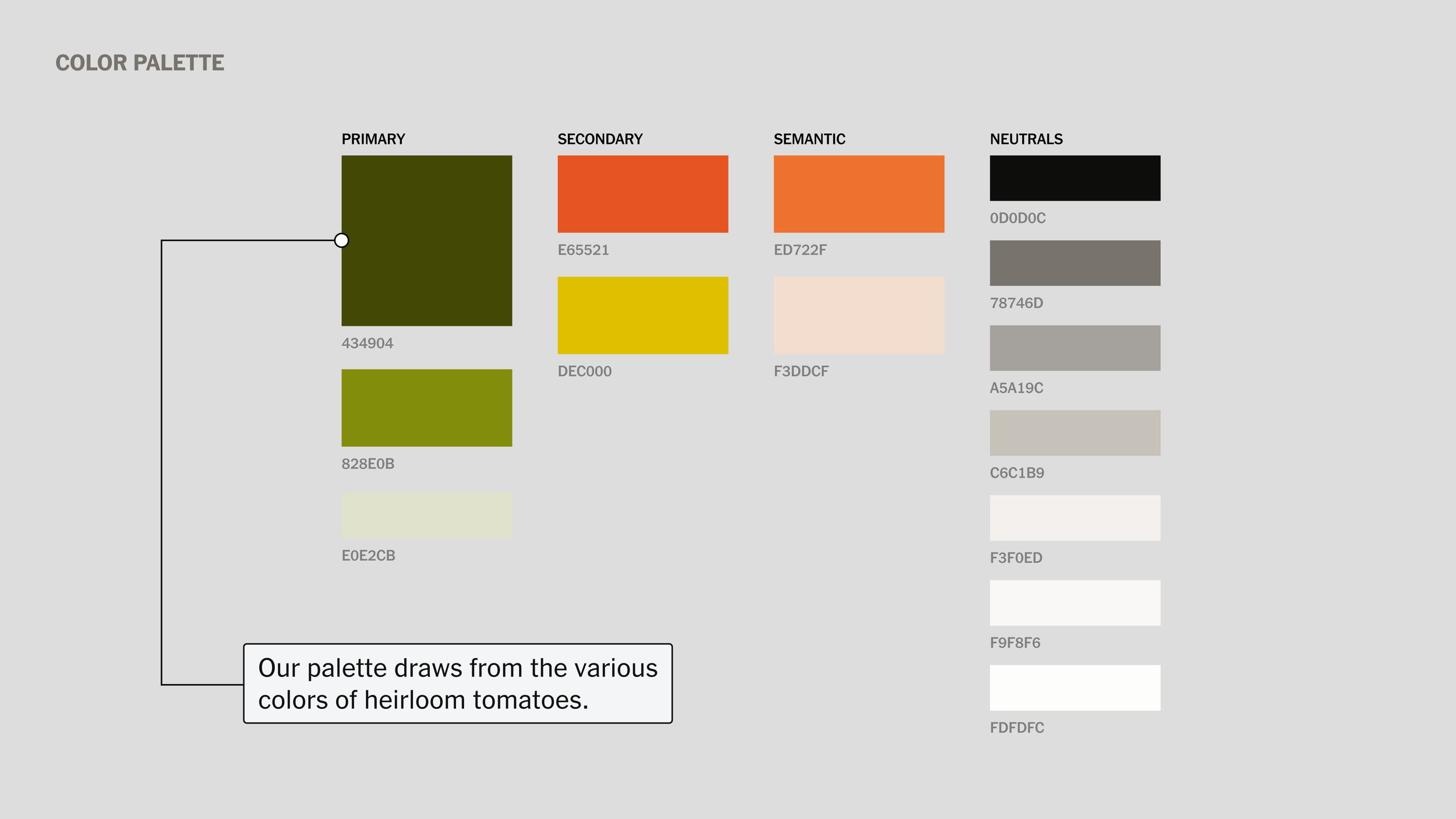
We explored warm, organic color palettes.
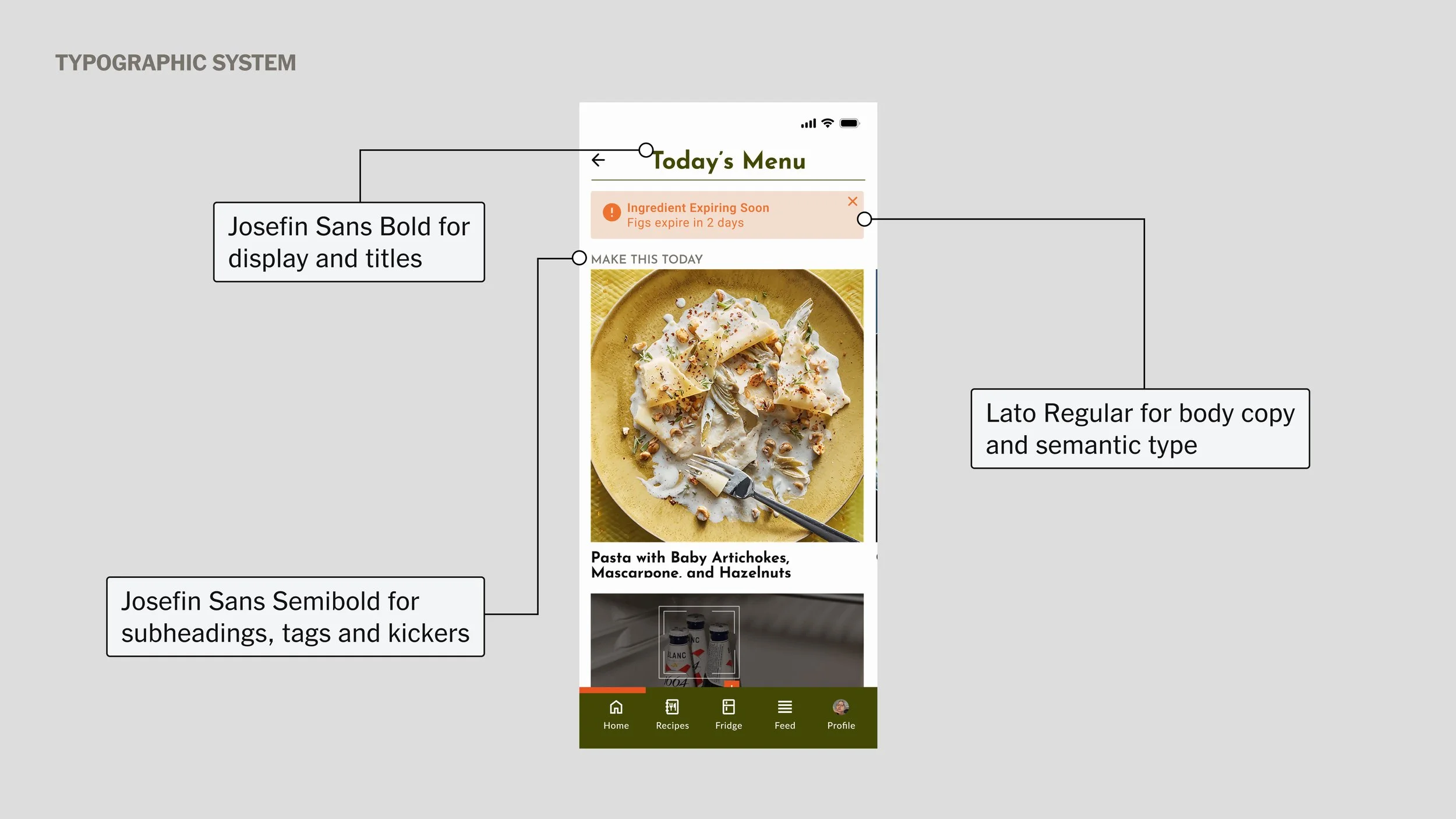
We tested typography that felt friendly and legible at small sizes.
Design System & Component Library
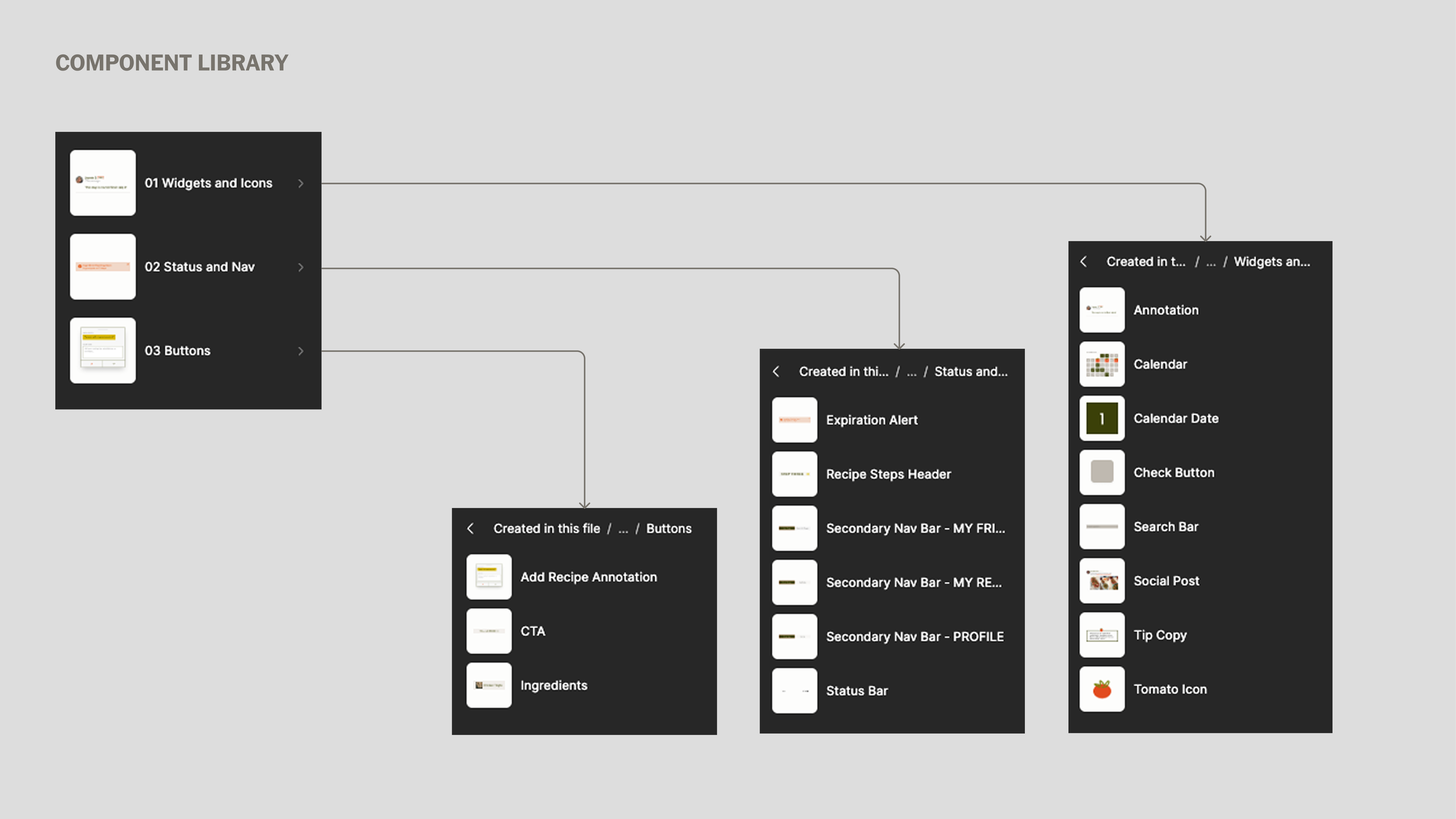
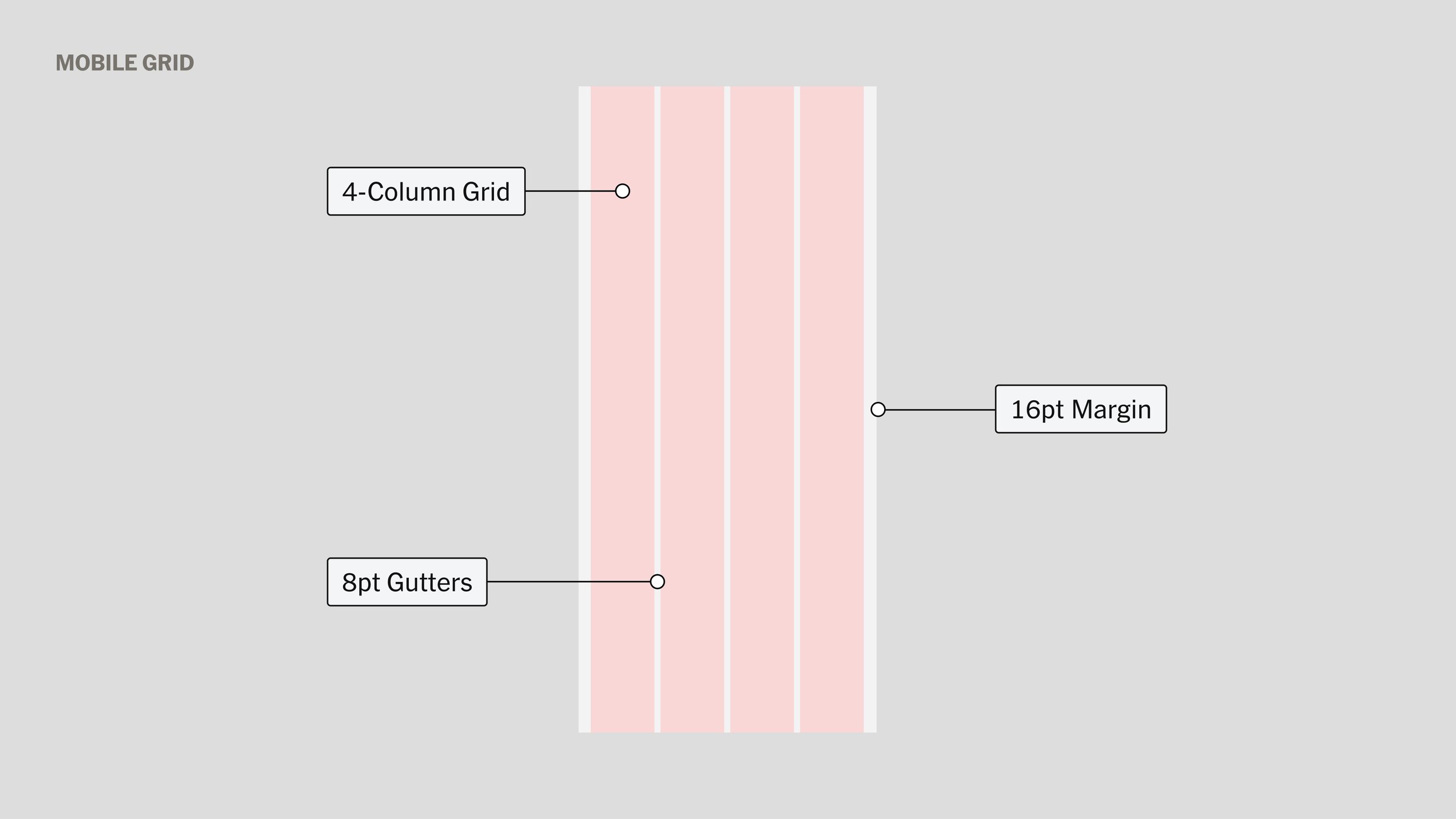
We built a small, flexible design system that evolved alongside the project to ensure a consistent experience across the product.